 It’s about a 10- to 15-minute walk from my rented flat to the university. I head down a half block of Logvinenko and take a right on four-lane Chui Avenue, one of the city’s main arteries. Thick traffic always: taxis, cars, busses, the minivan public transport called marshrutkas. I pass the massive, ornately fenced, white Government House, and just before I come to Ala-Too Square, I step onto the zebra to cross the road; the cars come to an astonishingly consistent and respectful stop when pedestrians are in the zebras.
Across Chui I am in city parks. The traffic sounds muffle. I hit my stride on uncrowded, tree-lined walkways. I walk past the Kyrgyz Dramatic Theater and turn onto Abdymomunov Street where drivers like to come and do spinouts on the ice in the winter.
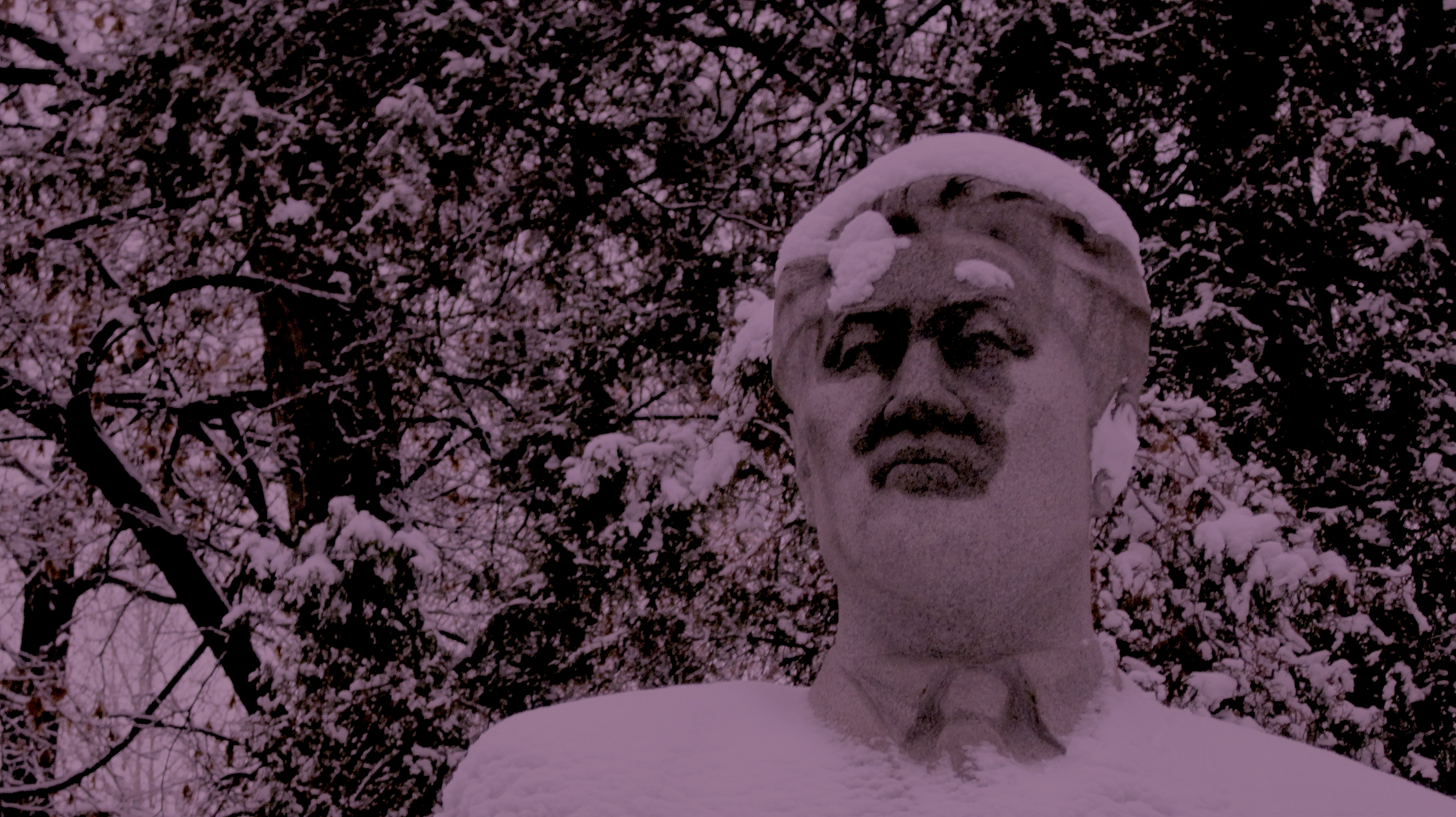
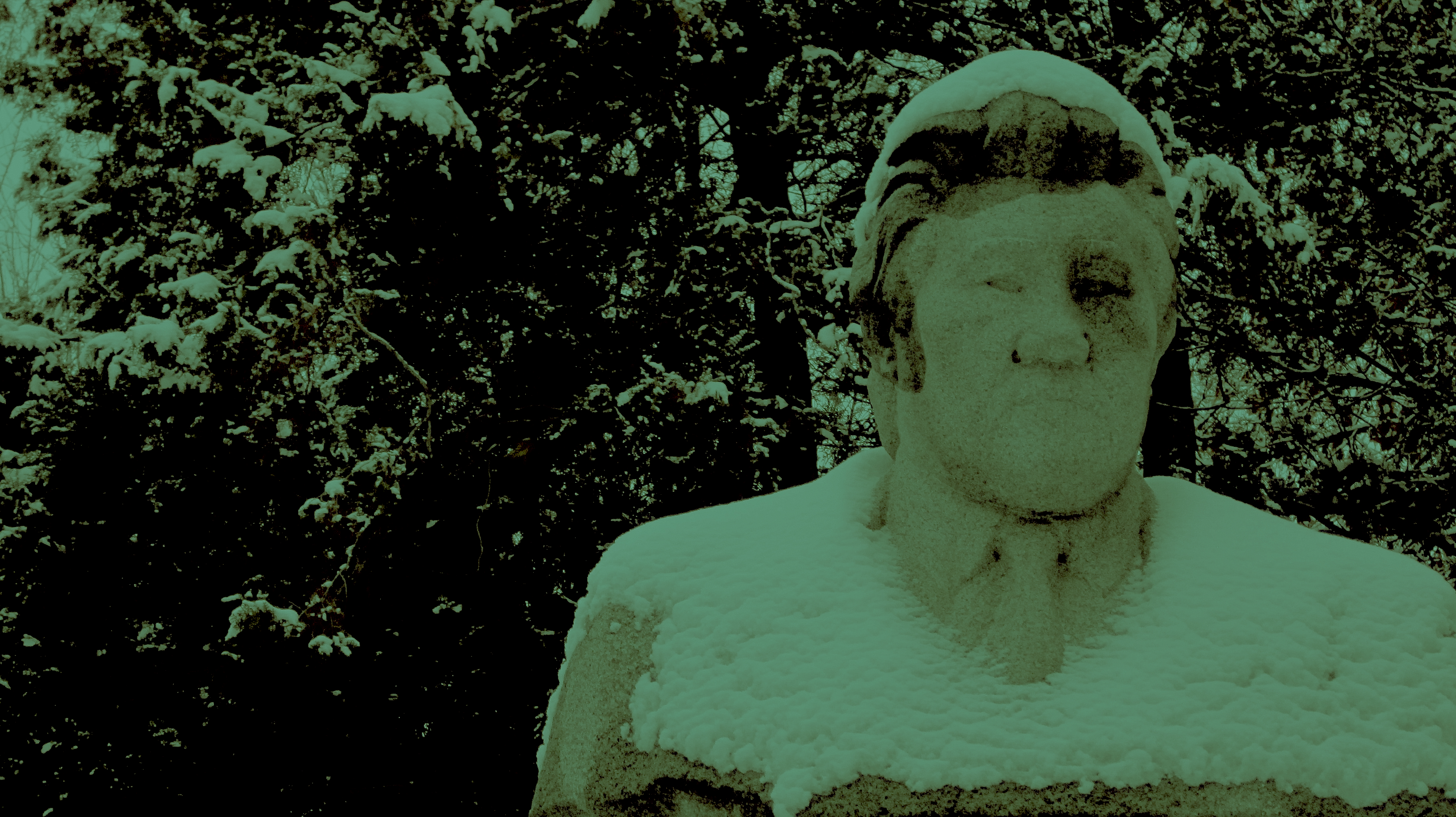
And then I pass one of a handful of Lenin statues in the city. It’s behind the State Historical Museum, which sits in the city’s main square, Ala-Too. This one is what a statue should be: formidable, commanding, oversized and a wee bit scary. (Another I saw features Lenin’s disembodied head floating about 10 feet up off the ground against a stone slab.) Unlike many former Soviet countries, Kyrgyzstan did not destroy its statuary when Communist rule ended, but they did banish this Lenin statue from center stage in the main square to this more obscure location behind the museum. Lenin the revolutionary, Lenin the tour guide. In this statue he stands with a joyless expression, his coat swirling at his knees, his telltale balding head and goatee. One arm outstretches before him. And if I follow the line of his fingertips, Lenin gestures with an open palm toward the university. The American University of Central Asia, according to a sign affixed beside the front entrance, was the Headquarters of the Supreme Soviet of the Kyrgyz Soviet Socialist Republic until 1984.
When people ask why I don’t write fiction, I will tell them this little story. And then I will ask: Why would I spend time making things up when real life pulsates with such delicious absurdities?

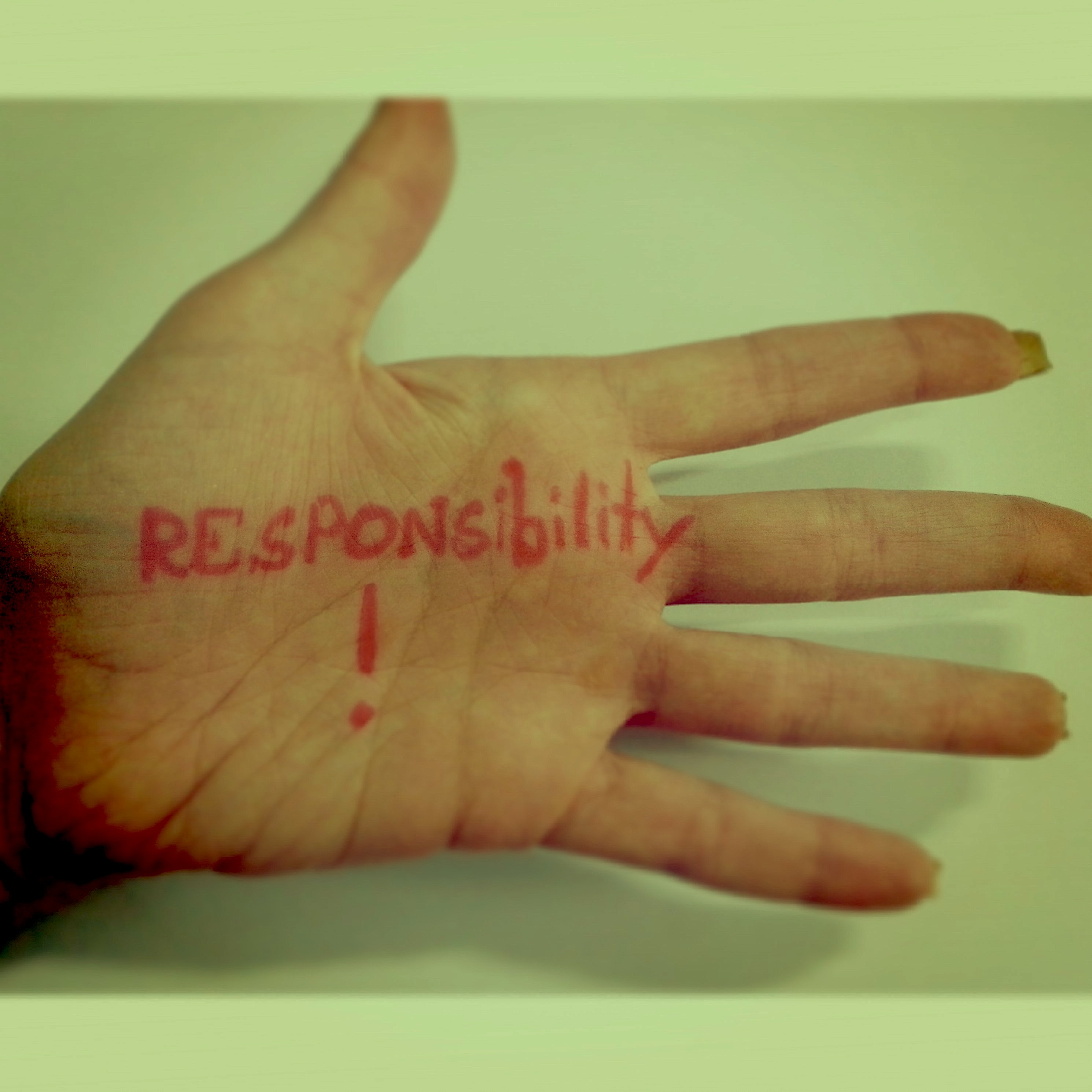

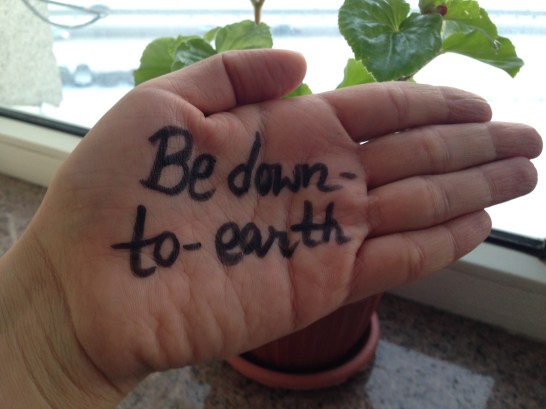
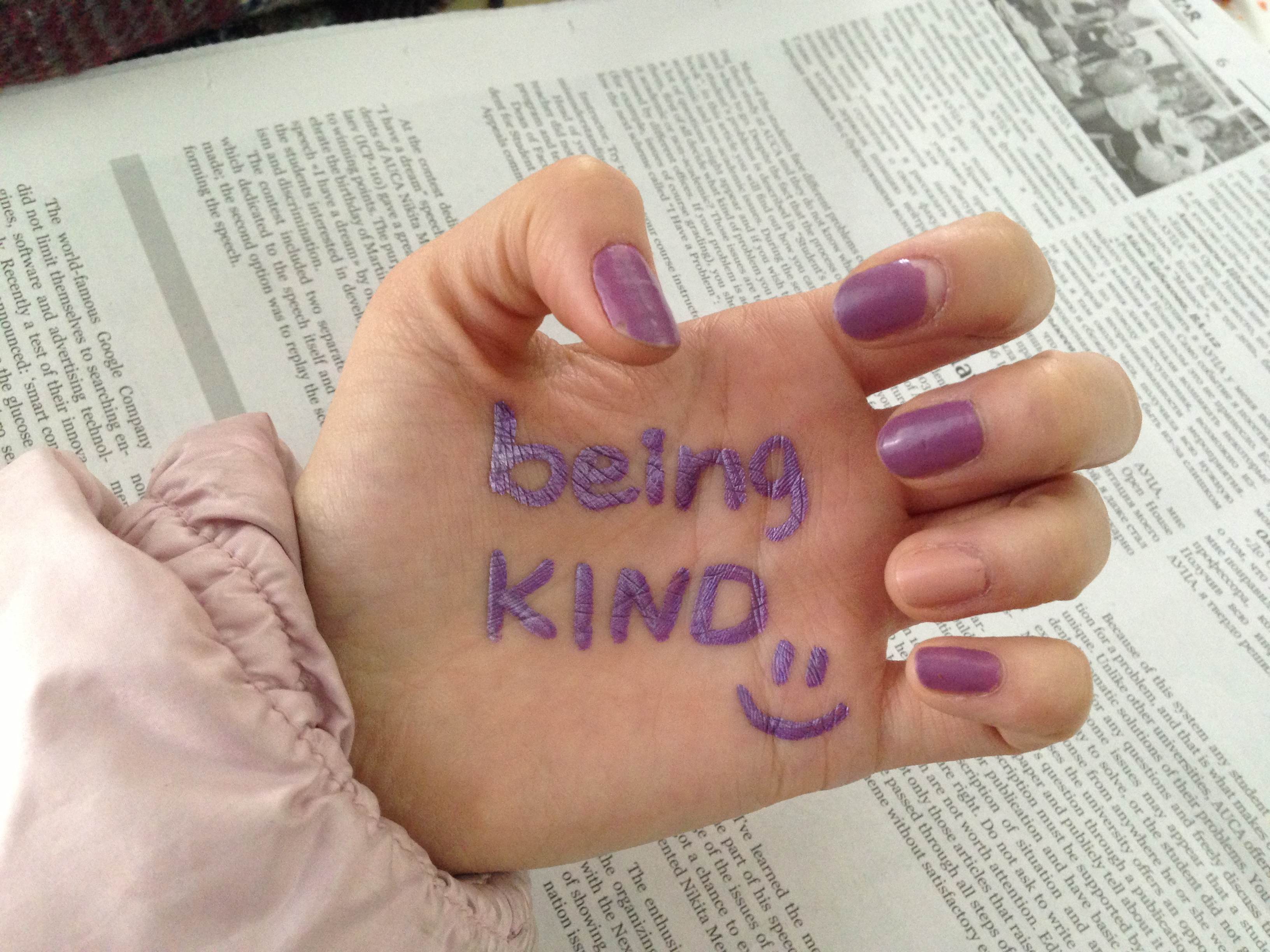
 We are talking ethics in one of the classes I am teaching this semester. There are 11 students in that class, and last week we discussed the symbol of the hand in our differing cultures. Give me your hand in marriage. Raising a hand to swear I will tell the truth, the whole truth and nothing but the truth, so help me God. The handshake, palmistry, praying, hand holding, hello + goodbye in the same gesture with the hand. Then we created The Hand Project. The idea: Interview people about their ethics, their principles. Engage them in a conversation about what they hold to be true in their deepest center. Then ask them to choose the one principle or value that is most important to their lives and write it on their hand. Any language. A word, phrase or sentence. The students are collecting the images, and in the spring, we will study them for what they might tell us and make an exhibition.




 untidy exuberances